
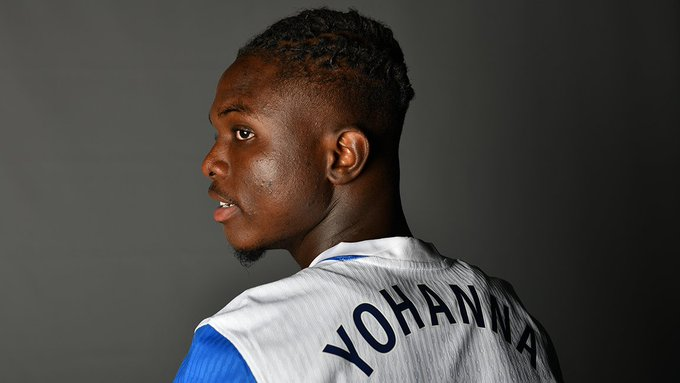
Zadok Yohanna, the Nigerian winger who became the most expensive sale in Swedish football history, arrives in England with a €28 million price tag, a reputation for fearless dribbling and a very different challenge ahead.
There is a particular kind of football story that moves quickly in the modern game, especially when a teenager arrives from a less fashionable league with a transfer fee large enough to make people look twice.
Zadok Yohanna has found himself at the centre of one of those stories after Brighton & Hove Albion agreed to sign the Nigerian winger from AIK, giving him a five-year contract through June 2031.
Brighton officially announced the agreement in June, while reported figures put the deal at €28 million initially, with another €2 million potentially available in add-ons.
The numbers alone make Yohanna interesting, but they do not explain why Brighton moved so aggressively for a player who had spent only one season in Sweden and had made relatively few senior appearances.
His appeal comes from the way he plays, the data behind his dribbling, the speed of his development and the fact that Brighton believe their environment can give him the time and structure required to turn raw ability into Premier League production.
That last part may matter more than the transfer fee.
At 19, Yohanna has already moved from the Ikon Allah Football Academy in Nigeria to AIK and then to the Premier League within roughly a year, a progression that would have been difficult to predict when he first left home as a young teenager to pursue football.
Now comes the part where the story becomes much harder.
From Bauchi to Stockholm, then Brighton

Yohanna’s journey began far away from the polished training centres and recruitment networks that surround Europe’s biggest clubs.
He grew up in Bauchi and left home when he was around 12 or 13 to join the Ikon Allah Football Academy, a decision that meant living far from his family and adjusting to a completely different daily routine while trying to develop as a footballer. He later described the experience as difficult, particularly because of how much he missed home during those early years.
His personality on the pitch was already beginning to reveal itself during those formative years.
Yohanna has spoken about how he would often ignore simple two-touch instructions because his instinct was to dribble, and one coach eventually turned that instinct into something more deliberate by challenging him to beat two opponents before releasing the ball. That detail says plenty about the player Brighton have bought because his first instinct remains to attack the defender rather than simply recycle possession.
AIK discovered him during a scouting trip through Africa in 2025, with the club’s scouting department identifying him in Nigeria before bringing him to Sweden for an initial period with the under-19 side. He adapted quickly enough to earn a professional contract and eventually made his senior debut in August 2025.
The speed of that development is one of the more interesting parts of the story.
Yohanna did not arrive in Sweden as a finished player, and AIK did not treat him as one. Their coaching staff worked on different areas of his game while allowing his strongest qualities to remain intact, particularly his ability to receive the ball under pressure, change direction quickly and attack space at speed.
AIK technical director Peter Wennberg described his ball control as one of the characteristics that immediately stood out, particularly the way he could manipulate the ball at both high and low speed while remaining difficult for defenders to read.
That development path matters when assessing what Brighton have actually purchased.
They have not bought a player who has dominated European football for several seasons. They have bought a teenager whose most interesting qualities have appeared early enough for them to believe there is considerably more to come.
The Numbers Behind the Excitement
Yohanna’s senior record at AIK was small, but the production was strong enough to attract attention.
Across 18 appearances in league and cup competitions, he recorded five goals and four assists before completing his move to Brighton. Brighton themselves confirmed those figures when announcing his signing.
His 2026 Allsvenskan numbers are even more useful when placed in context because he played only 13 league matches before leaving Sweden. He scored twice and supplied three assists during that league spell, while his overall 2026 club record also included three goals in the Svenska Cupen.
The more revealing figures concern his dribbling.
According to Opta Analyst, Yohanna averaged 8.5 dribble attempts per 90 minutes in the Allsvenskan during 2026 before his transfer, the highest figure recorded by any player in the division. He also ranked first for take-ons driving into the box and produced 15 successful take-ons inside the penalty area, despite playing considerably fewer minutes than many of the division’s established players.
That profile tells us more than the raw goal total.
Yohanna is not primarily valuable because he has already shown himself to be a prolific scorer. His value comes from his capacity to create situations that most players are reluctant or unable to attempt, especially when receiving the ball wide and facing a defender with space behind them.
His natural position is the right wing, where his left foot allows him to move inside, although AIK also used him in other positions during his development. He can operate as an inverted winger, move into central areas and, depending on the structure around him, play closer to the role of a No 10.
That flexibility could become important at Brighton.
The Lamine Yamal Comparison Needs Context
The Lamine Yamal comparison has helped push Yohanna’s name beyond Sweden, but it needs to be treated carefully.
AIK teammates did make the comparison, particularly because of Yohanna’s unpredictable movement and ability to move inside and outside a defender in quick succession. Taha Ayari was particularly emphatic when asked about his teammate, while other AIK players also pointed to similarities in the way Yohanna attacks defenders.
Yohanna himself has been more comfortable discussing Riyad Mahrez.
His former teammates in Nigeria gave him the Mahrez nickname because of his left-footed dribbling and ball-carrying style, and Yohanna has said that Mahrez is the player he identifies with rather than Yamal or Michael Olise.
That difference is worth making because comparisons with Yamal can create expectations that no 19-year-old should have to carry.
Yamal was already operating at an extraordinary level for Barcelona and Spain while still a teenager, whereas Yohanna is arriving in England having played only a limited number of senior matches in Sweden.
Their similarities are therefore more about movement, technical confidence and the willingness to attack defenders than about their current level.
For Brighton, the important point is not whether Yohanna becomes another Yamal.
It is whether the qualities that produced those comparisons can survive against Premier League defenders.
Brighton Have Bought Into the Upside
Brighton’s decision makes more sense when viewed through the club’s recruitment model.
The club has built a reputation for identifying young players before they become established stars and placing them in an environment where development remains central to first-team planning. Yohanna has openly said that Brighton’s use of young players was one of the reasons he chose the club, adding that he believes their style of football will suit him.
That is important because the expectation around Yohanna should not be that he immediately becomes Brighton’s main attacking player.
Fabian Hürzeler has already acknowledged the need for patience, describing Yohanna as a young player who must adapt to the Premier League while highlighting his pace, creativity and willingness to take opponents on.
The club’s own technical staff appear to see a similar long-term picture.
Yohanna has been included in Brighton’s first-team plans rather than being immediately sent away on loan, according to reporting before pre-season, while the club’s recruitment of him reflects a belief that his development can continue within their own system.
That does not guarantee minutes.
Brighton have several attacking options, and the Premier League is unforgiving when a winger loses possession in dangerous areas. Yohanna will have to learn when to attack his man, when to release the ball and when a safer decision is the better one.
Those are not small adjustments.
They are the difference between being an exciting young winger and becoming a reliable Premier League player.
Where Yohanna Can Hurt Premier League Defences
His most obvious weapon is one-on-one ability, but the value of that skill depends on where and when he receives the ball.
Yohanna prefers the right side and uses his left foot to move inside, which creates several possibilities for Brighton because he can attack the full-back directly, combine with an overlapping runner or carry the ball into the half-space before looking for a shot or final pass.
His close control allows him to slow the defender down before suddenly accelerating, while his changes of direction make it difficult for opponents to predict whether he will attack the outside channel or cut inside.
That unpredictability was already visible at AIK.
He also showed an ability to move towards the back post when attacks developed on the opposite flank, using his height to become an additional target rather than remaining permanently outside the penalty area. His aerial contribution was particularly noticeable in league and cup matches in Sweden.
That gives Brighton another layer to work with.
The most interesting development may come if he becomes more comfortable moving centrally without the ball, because his technical qualities could become more dangerous when defenders have to decide whether to follow him into midfield or leave him between the lines.
AIK’s staff also noted his reaction after losing possession, with his willingness to close gaps and recover the ball considered part of his development.
For a Brighton side that wants intensity without the ball, that detail could matter almost as much as his dribbling.
The Biggest Obstacle Is Not Talent
The Premier League will test Yohanna in ways Sweden could not.
The first challenge will be decision-making.
A player can attempt eight or nine dribbles per 90 minutes in a league where there is more room to carry the ball, but the same approach can become dangerous in England if possession is repeatedly lost in poor areas.
Premier League defenders close faster, midfielders arrive sooner and attacking players are punished when they spend too long trying to beat the same opponent.
Yohanna will therefore have to learn how to keep his unpredictability without becoming predictable in another way.
There are also questions about his defensive positioning, physical adaptation and consistency over a long Premier League season.
He has experience of playing in different positions, but that experience came during a very short senior career, meaning Brighton still have to discover which role gives him the best balance between freedom and responsibility.
The injury situation also needs monitoring.
Sofascore listed Yohanna as dealing with a thigh injury, with the record updated in late July and an expected return in September, meaning his immediate start to life at Brighton has been interrupted rather than following the clean pre-season progression the club would have wanted.
That makes patience even more important.
The Nigeria Question

There is another part of Yohanna’s development that remains unfinished.
He has yet to make his senior debut for Nigeria.
He was included in the wider international conversation around the 2026 Unity Cup, but AIK did not release him at the time because of the transfer process and an injury situation. His inclusion in the Golden Boy rankings later provided another indication of how quickly his reputation had grown outside Sweden.
In July, Yohanna was ranked 80th in the Golden Boy top 100, ahead of Brighton teammate Charalampos Kostoulas, who was ranked 83rd. The list includes many of Europe’s most prominent young players and has previously been won by players such as Yamal and Jude Bellingham.
For Nigeria, the timing is intriguing.
The country has produced a long line of attacking players capable of thriving in Europe, but Yohanna represents a different pathway because his move from a Nigerian academy to Sweden and then directly into a Premier League development environment happened so quickly.
His next international step should therefore be handled carefully rather than rushed simply because his transfer fee has raised expectations.
Will Zadok Yohanna Break The Norm?
The answer depends on what the norm is supposed to be.
If the expectation is that a 19-year-old winger arriving from Sweden should immediately become a Premier League star, then the sensible answer is no. That is an unreasonable standard for a player with such limited senior experience, particularly one who has already had to adjust to two different football cultures in a short period.
If the question is whether Yohanna can become something more than another promising teenager who briefly excites supporters before disappearing into the long list of unfinished prospects, the evidence is considerably more encouraging.
He has already broken one norm by moving from a Nigerian academy to European senior football and then becoming the most expensive player ever sold by a Swedish club, according to the reported €28 million transfer figure.
He has also done it without the benefit of several established seasons in European football.
That is the unusual part.
The next stage will be much less glamorous.
Yohanna needs minutes, patience, physical development, better final decisions and enough opportunities to make mistakes without every missed pass becoming evidence that the transfer fee was too high.
Brighton appear willing to provide that environment.
Their coach has already spoken about giving him time to adapt, while the club’s recruitment strategy suggests they are buying the player he could become rather than simply paying for what he has already achieved.
That may be the most important reason to believe he can succeed.
There is no need for Yohanna to become Lamine Yamal, Riyad Mahrez or anyone else.
His own ceiling will be determined by whether the fearless winger who learned to trust his dribbling in Nigeria can develop the judgement required to use that ability at Premier League speed.
For now, the €28 million price tag tells us what Brighton believe he might become.
The next few years will tell us whether that belief was ahead of its time, or whether Yohanna was simply one of those players who needed the right club, the right coaching environment and one opportunity to change the trajectory of his career.
At 19, he has already made the journey from Bauchi to Stockholm and from Stockholm to the Premier League.
The difficult journey is the one that comes next.
You Might Also Want To Read This
- Top 10 Best Strikers (Centre-Forward) In The World 2024
- Top 10 Goalkeepers In The World 2024
- Top 10 Right Wingers In The World 2024
- Top 10 Best Left Back In The World 2024
- Top 10 Best Right Back In The World 2024
- Top 10 Attacking Midfielders In The World 2024
- Top 10 Defensive Midfielders In The World 2024
- Leeds United’s 10 Greatest Players Of All Time
- Aston Villa’s 10 Greatest Players Of All Time
- 8 Football Clubs That Have Suffered Deep Decline
- The Number 10 In Soccer – Why It’s So Special
- 10 Of The Greatest Danish Players Of All Time
- 10 Of The Greatest Irish Soccer Players Of All Time

